tgarchirvetech Gaming Trends 2026: How AI and Cloud Tech Are Reshaping the Industry
- The Generative AI Disruptor
- The Genie Effect
- Production Statistics
- The Rise of the "Third Space" in the US
- Persistent Brands
- The Open Hardware Movement
- Technical Infrastructure & Hardware Longevity
- The Efficiency Pivot
- Cloud Scaling
- The Strategic Need for Inclusivity and LiveOps
- Accessibility as a Growth Engine
- The Live-Service Economy
- Challenges: Ethics in an AI World
- Data Privacy
- Monetization Ethics
- 2026 Financial Comparison: Cloud Gaming vs Local Hardware
- The "Why" Behind the Shift: Economic and Social Metrics
- Technical Strategy: AMD’s "Longevity" Masterclass
- Ethics, Privacy, and the AI Safety Net
- People Also Ask / FAQs
- How did Google's Project Genie impact the market?
- Is the "Open Gaming" movement relevant to casual players?
- Why is AMD still supporting the AM4 platform in 2026?
- What is the future of branded "Islands" like the Qatar Airways Qverse?
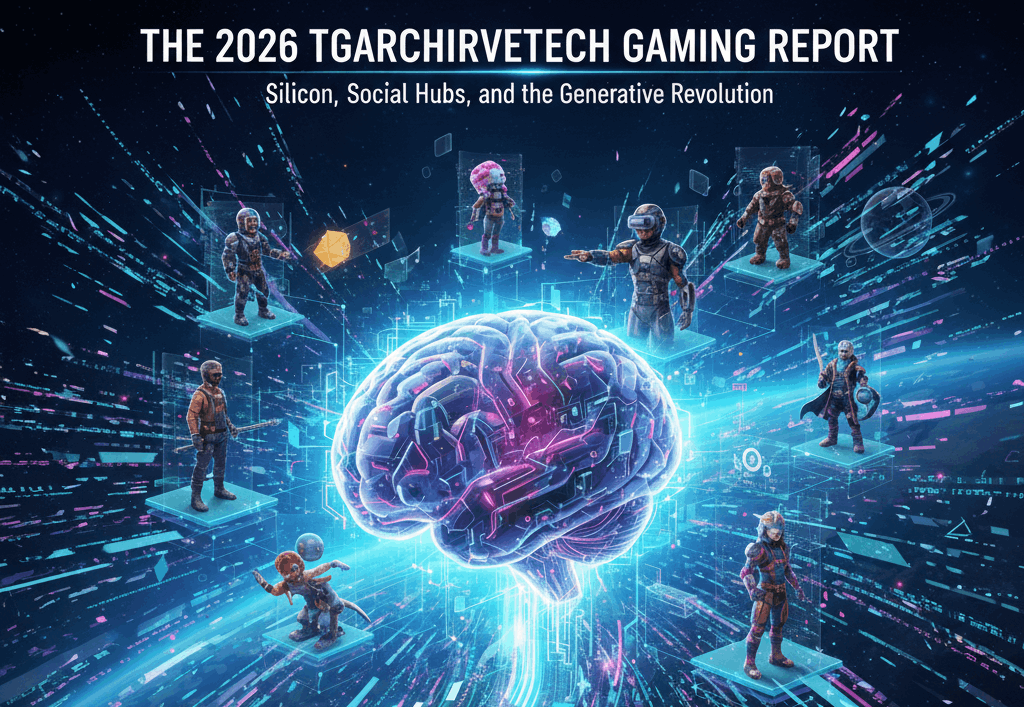
The American gaming industry has moved beyond the console wars of the past. In 2026, the sector is defined by tgarchirvetech gaming trends, a convergence of automated world-building, cloud infrastructure, and decentralized player ownership that is reshaping how games are created, distributed, and experienced.
The Generative AI Disruptor
The most significant technical shift in 2026 is the transition from human-coded environments to AI-native landscapes. Game worlds are no longer built entirely by hand. Instead, they are generated, adapted, and expanded through machine intelligence.
- The Genie Effect: In early 2026, Google’s Project Genie demonstrated the ability to turn a text prompt into a functional 2D platformer in seconds. This has led to a 15% valuation shift in traditional gaming stocks as investors pivot toward platforms that facilitate AI-assisted creation.
- Production Statistics: According to Scribd’s analysis of gaming evolution, AI integration has reduced the "asset creation" phase of development by up to 40%. This allows indie studios to produce content that previously required teams of hundreds.
The Genie Effect
For American Gen Z and Alpha, gaming is no longer a hobby—it is their primary social network.
- Persistent Brands: The integration of real-world services into games is exemplified by the Qatar Airways Qverse in Fortnite. This isn't just marketing; it's a virtual Doha experience that has seen engagement rates 3x higher than traditional video ads.
- The Open Hardware Movement: In the US, the Open Gaming Collective has fueled a surge in Linux-based handheld gaming. With software like Bazzite, players are reclaiming control over their hardware. Stat: Handheld PC sales in the US have grown by 22% year-over-year, challenging the dominance of traditional home consoles.
Production Statistics
According to Scribd’s analysis of gaming evolution, AI integration has reduced the asset creation phase of development by up to 40 percent. This compression of production timelines has empowered indie studios to produce content that previously required hundreds of developers, dramatically lowering the barrier to entry.
The Rise of the Third Space in the United States
For American Gen Z and Gen Alpha players, gaming is no longer a side activity. It has become their primary social network, blending entertainment, communication, and digital identity into a single persistent space.
Persistent Brands
The integration of real-world services into games is best illustrated by the Qatar Airways Qverse experience in Fortnite. Rather than a static advertisement, Qverse functions as a virtual version of Doha itself. Engagement rates inside the experience are reported to be three times higher than traditional video ads, signaling a shift toward experiential brand presence.
The Open Hardware Movement
In the United States, the Open Gaming Collective has accelerated the adoption of Linux-based handheld gaming. Software distributions like Bazzite are allowing players to reclaim control over their hardware and operating environments. Handheld PC sales in the US have grown 22 percent year over year, directly challenging the dominance of traditional home consoles.
Technical Infrastructure and Hardware Longevity
The technical foundation of 2026 gaming is built on sustainable silicon and low-latency streaming rather than constant hardware replacement.
The Efficiency Pivot
During AMD’s CES 2026 roundtable, a surprising trend emerged. Many American gamers are remaining on the AM4 platform instead of upgrading to newer architectures. Improved software optimization and cloud-native access have extended the usable lifespan of mid-range hardware, reducing the need for expensive annual upgrades.
Cloud Scaling
Cloud gaming infrastructure in the United States has reached a tipping point. With 5G penetration exceeding 90 percent in urban areas, services such as Xbox Cloud Gaming have increased monthly active users by approximately 25 percent since 2024. Cross-platform play is now considered a baseline expectation by nearly 90 percent of US gamers.
The Strategic Need for Inclusivity and LiveOps
The tgarchirvetech model is gaining momentum because it directly addresses the industry’s two biggest challenges: rising development costs and long-term player retention.
Accessibility as a Growth Engine
Advanced accessibility features are unlocking a global market of more than 400 million gamers with disabilities. In the United States, titles that include comprehensive accessibility options show approximately 12 percent higher day-30 retention rates compared to those that do not.
The Live-Service Economy
Data from Gamestudio N-iX indicates that seasonal content and user-generated content are the strongest revenue drivers. In 2025, payouts to creators on platforms like Roblox and Fortnite Creative surpassed 1.8 billion dollars, confirming that players increasingly want to participate as creators rather than passive consumers.
The Challenges: Ethics in an AI World
Despite rapid growth, tgarchirvetech gaming trends face serious challenges that will shape the industry’s long-term credibility.
Data Privacy
As AI-driven personalization becomes more sophisticated, the protection of behavioral and biometric data has become a top legislative priority in the United States.
Monetization Ethics
In 2026, the industry has continued its move away from opaque loot box systems toward transparent battle passes and player-first digital economies that emphasize fairness and choice.
2026 Financial Comparison: Cloud Gaming vs Local Hardware
| Feature | High-End Gaming PC | Xbox Cloud Gaming | NVIDIA GeForce NOW |
|---|---|---|---|
| Upfront Cost | $1,500 – $2,500+ | $0 (existing device) | $0 (existing device) |
| Monthly Fee | N/A | $19.99 | $19.99 |
| Hardware ROI Period | 48–60 months | Immediate | Immediate |
| Performance | Local 4K / 144Hz | 1080p / 60fps | 4K / 240Hz |
| Device Flexibility | Low | High | Very High |
The Why Behind the Shift: Economic and Social Metrics
The move toward tgarchirvetech gaming trends is grounded in economic reality. The average cost to develop a AAA game in the United States now exceeds 200 million dollars. AI-driven pipelines and cloud distribution models offer a path to sustainability.
The US cloud gaming market alone is projected to reach 6.91 billion dollars by 2026, growing at a compound annual rate of 40 percent. Meanwhile, users of open-source handheld systems spend roughly 30 percent more time gaming each week due to faster resume times and system efficiency.
Ethics, Privacy, and the AI Safety Net
As AI systems become more embedded in gameplay, data safety has moved to the forefront of public debate. AI-driven characters require extensive behavioral data, raising questions about storage, consent, and long-term use.
The tgarchirvetech framework increasingly emphasizes on-device AI processing, ensuring sensitive interactions remain local whenever possible. This standard is being actively promoted by the Open Gaming Collective as a safeguard against misuse.
People Also Ask
How did Google’s Project Genie impact the market?
Project Genie triggered a market correction by demonstrating that AI can generate playable games quickly. Investors reassessed the value of massive development teams, accelerating funding toward AI-first studios.
Is the open gaming movement relevant to casual players?
Yes. Open-source platforms like Bazzite improve battery life, performance consistency, and ease of use, creating a smoother experience for casual, short-session players.
Why is AMD still supporting the AM4 platform in 2026?
AMD’s strategy centers on sustainability and user retention. Supporting older platforms keeps budget-conscious gamers engaged while software and cloud services absorb more performance demands.
What is the future of branded islands like the Qatar Airways Qverse?
Branded virtual environments deliver deeper engagement than traditional ads. By 2027, most Fortune 500 companies are expected to maintain persistent presences inside major social gaming platforms.